




Lifting Rail System
Your Professional Lifting Rail System Supplier!
Ocean is a leading domestic conveyor line supplier established in 2005. With its own factory and more than 18 years of working experience.
Rich Product Variety
Our company has a series of products including conveyor systems, conveyor chains, conveyor tracks, automatic storage and retrieval, coiling components, drive devices, hangers, return roller horizontal curves and conveyor trolleys.
Wide Range Of Product Applications
Our company's products are mainly used in manufacturing, logistics warehousing, food and beverage, construction, airport baggage transportation, waste disposal, e-commerce and other industries.
Delivery And Shipment Time
Our company's sample delivery cycle is generally 15 working days. The production delivery cycle is 30-60 working days after receiving the deposit.
Quick Response
We promise to respond to your inquiries within 24 hours to ensure that you receive the information and support you need in a timely manner.


Features of Lifting Rail System
High Space Utilization
The lifting rail system can maximize the use of limited vertical space and is suitable for multi-story buildings or areas with complex terrain.
01
Safety
Modern lifting rail systems are usually equipped with multiple safety protection measures, such as overload protection, emergency braking system, etc., to ensure safety during operation.
02
Stability
The lifting system is designed with emphasis on stability, which can reduce vibration and noise during operation and provide users with a comfortable experience.
03
Convenient Operation
Most lifting rail systems use automated control, and users only need to press a button or operate through a mobile phone application, which simplifies the use process.
04
Strong Adaptability
The lifting rail system can be designed and modified according to different terrains and usage requirements, and can flexibly adapt to various environments.
05
Type of Lifting Rail System
Motor Lifting System
Use the elevator as the mechanical part to lift or lower passengers or goods. Commonly used in high-rise buildings, office buildings, hotels and other places.
Chain Lifting System
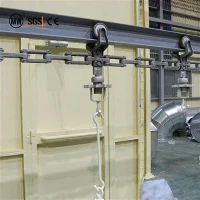
Through chains and gears, drive the lifting platform or objects attached to the chain to lift or lower. Commonly used in factories, warehouses, garages and other places.
Crane Lifting System
Use a crane as the mechanical part to lift or lower objects, commonly used in factories, ports, construction sites and other places.
Bridge Lifting System
Through the bridge structure, lift or lower objects, commonly used in factories, ports, warehouses and other places.
Roller Lifting System
Use rollers and straps or chains to lift or lower objects, commonly used in factories, warehouses and other places.
Pneumatic Lifting System
Use air pressure to lift or lower objects, commonly used in medical, manufacturing and other fields.
Hydraulic Lifting System
Use hydraulic pumps and cylinders to lift or lower objects, commonly used in heavy industrial equipment.
Air Lifting System
Use air pressure to lift or lower objects, commonly used in light industrial equipment.
Installation of Lifting Rail System

Preliminary Preparation
Design planning: Design the system according to actual needs, including the layout of the track, the location of the lifting device, the load capacity, etc.
Site survey: Survey the installation site to ensure the stability of the foundation and measure the dimensions of the space.
Material Preparation
Determine the required materials and equipment, including tracks, lifts, drive systems, control systems, etc.
Check the quality of the materials to ensure that they meet the standards.
Foundation Construction
Construct the foundation according to the design drawings to ensure the stable installation of the track. If necessary, pour concrete to ensure sufficient load-bearing capacity.
Track Installation
Lay the track according to the design drawings and fix the track components to the foundation. Ensure the horizontality and verticality of the track to avoid friction and wear during operation.
Lift Installation
Install the electric lift or other type of lifting mechanism to ensure that it fits well with the track. Assemble according to the manufacturer's instructions and ensure that the components are tightly connected.
Electrical System Installation
Install the control system and electrical lines to ensure that the lift can operate normally. Define the operation interface to ensure easy operation.
Testing And Debugging
Preliminary power connection and functional testing of the system to ensure that all functions are normal. Debug according to the test results, including adjusting speed, load and safety protection devices.
Safety Inspection
Ensure that all components meet safety standards and check whether the braking system, limit devices, etc. are normal. Add necessary safety signs and operating instructions to the system.
Final Acceptance
Carry out comprehensive inspection and testing to confirm that the system operates stably and meets the design requirements. Prepare relevant documents to record the installation process and matters worth noting.

Application of Lifting Rail System
Industrial Manufacturing
On automated production lines, lift rail systems can realize automatic conveying and lifting of materials, improving production efficiency.
Building and Construction
On construction sites, lift rail systems are used to lift building materials, equipment, etc. to high floors, reducing the workload of manual handling and improving safety.
Warehousing and Logistics
In warehouses, lift rail systems can be used to move goods up and down, and cooperate with conveyor belts to achieve automatic loading and unloading, improving logistics efficiency.
Ports and Docks
In ports, lift rail systems are used for the handling and loading and unloading of containers, allowing containers to get on and off ships quickly and efficiently.
Elevators and Vertical Transportation
In commercial buildings and high-rise residential buildings, lift rail systems can serve as the working basis of elevators to help people move between different floors.
Amusement Facilities
In amusement parks, lift rail systems are widely used in roller coasters and other amusement facilities to provide exciting experiences.