


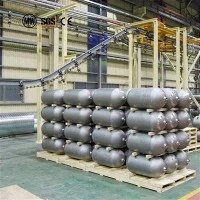
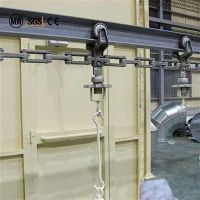


Overhead Conveyor
Your Professional Overhead Conveyor Supplier!
Ocean is a leading domestic conveyor line supplier established in 2005. With its own factory and more than 20 years of working experience.
Rich Product Variety
Our company has a series of products including conveyor systems, conveyor chains, conveyor tracks, automatic storage and retrieval, coiling components, drive devices, hangers, return roller horizontal curves and conveyor trolleys.
Wide Range Of Product Applications
Our company's products are mainly used in manufacturing, logistics warehousing, food and beverage, construction, airport baggage transportation, waste disposal, e-commerce and other industries.
Delivery And Shipment Time
Our company's sample delivery cycle is generally 15 working days. The production delivery cycle is 30-60 working days after receiving the deposit.
Quick Response
We promise to respond to your inquiries within 24 hours to ensure that you receive the information and support you need in a timely manner.
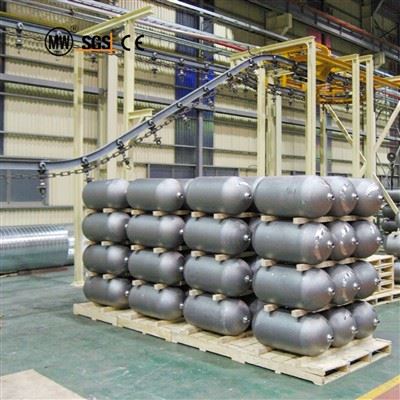
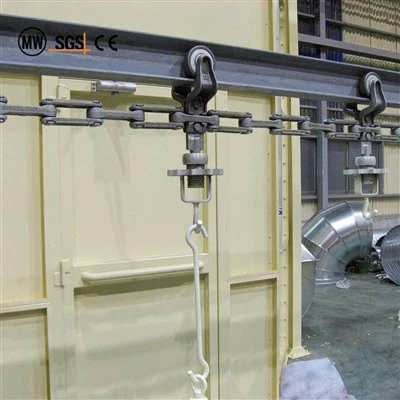


Features of Overhead Conveyor
Product Carried Overhead
In an overhead conveyor the load travels above the working area instead of through it, and almost everything else about the system follows from that one change. The floor stays clear for machines, storage and people, and the route is no longer tied to the space a floor conveyor would occupy. It is the reason an overhead line can often be fitted into a building that has no room left for anything else.
Route Follows the Building
The circuit can run straight, turn, rise and return within the same loop, so it is laid out around the structure that already exists rather than the building being rearranged around the line. Columns, cranes and existing services are treated as obstacles to route around rather than as reasons to change the layout. On a site that is already full, that flexibility is often the argument that makes the project possible at all.
One Drive Serves the Whole Circuit
A single drive unit moves the chain round the loop. There is no transfer between sections and no second drive to keep in step with the first, which removes the usual place where a conveyor hand-over goes wrong. Fewer drives also means fewer control points, fewer things to synchronise and less to go wrong when one station is stopped.
Floor Space Released
Because nothing is carried at floor level, the area beneath the track can be used for another purpose. The saving is not only the width of a floor conveyor, but the access space that would have been kept clear on both sides of it, which on a busy line is often the larger part of the total.
Buffering at the Stations
Where the system is arranged for it, carriers can be held at a station while the chain continues to run, so a stoppage at one point is absorbed instead of being passed on. That is what allows stations with different cycle times to work on the same loop, and it is usually what keeps a line running while one operation catches up.
Product Can Pass Through the Process
The track can be routed through a washer, a spray booth, a drying zone or an oven, so coating, curing and conveying happen on one circuit rather than being three separate operations joined by manual handling. Every manual transfer removed from a process is a handling cost removed with it, and a place where product is no longer dropped or marked.
Straight Track and Curves From One System
The circuit is assembled from straight track sections and formed curve sections. Straight track is supplied in standard lengths and cut to suit, while the curves are fixed items whose radius the rest of the layout has to respect. Because the curves cannot be adjusted on site, they are the part of the route to settle first when a circuit is being planned.
Speed Set to the Process
The drive speed can be set to the pace the stations need rather than to a single fixed figure chosen when the conveyor was built. A line can therefore be run at the takt of the work it serves, and re-timed later if the operation changes, without the conveyor becoming the constraint on throughput.
Maintainable From Floor Level
Chain, track and carriers can be inspected and lubricated from below at a working height, without dismantling track or stopping the stations next door. On a line that runs long shifts, being able to service the circuit from the floor is what keeps the routine short, and a short routine is one that actually gets done.
Extendable and Re-Routable
A circuit can be extended by adding track and carriers, and an individual section can be re-routed without replacing the rest of the system. That is what allows an overhead line to follow a plant as the plant changes, instead of becoming the fixed item that everything else has to work around. An extension is also usually cheaper than a new circuit, because the drive, the structure and the supports are already in place and only the added section has to be paid for.
Track Shields the Chain
In an enclosed system the chain runs inside the track, so the running surfaces are protected from dust, overspray and accidental contact, and the chain is guided along its whole length rather than only where the wheels carry it. Protection of that kind shows up as a longer interval between services rather than as a visible improvement.
Quiet Running at Height
Because the drive and the running contact are away from the working area, the noise a conveyor makes is not made beside the operator. On lines where people work along the conveyor for a whole shift, that is worth as much as the floor space the overhead route releases.
Loads Cross Without Meeting
Because the circuit runs at height, two routes can cross one another without a junction, a turntable or a transfer. On a plant where material has to move in more than one direction, that removes the congestion that appears wherever two floor routes have to share the same corner.
Weather and Washdown Tolerated
An overhead circuit can be carried outside the building envelope, between buildings, or through an area that is washed down, provided the track and the chain are selected for it. That allows a line to link two halls without a corridor being built for it, which is often the cheapest part of a plant extension.
Preparation
Check the delivered track, chain, carriers and fixings against the packing list and inspect them for transit damage before anything is lifted into position. Establish where the circuit runs, what the track will be fixed to, and which access equipment and tools the work needs. Time spent at this stage is usually recovered several times over during the fitting, because a missing bracket found on the floor is a small problem and the same bracket found at height is not.
Laying Out and Positioning
Set the route out from the design drawings before any fixing is drilled. A laser level or a taut line is the usual way to hold both the line and the change of level along the circuit, because an overhead track has to be correct in two dimensions rather than one. The position of the first bracket and of the first curve is worth confirming before the second one is fixed, since the curves set the route for everything between them.
Foundation and Structure Check
Where the track is carried on floor-mounted supports, the floor has to be sound and level enough to take the weight of the track, the chain and the loaded carriers. Where the track is hung from the structure instead, the steelwork takes the place of the floor as the thing to verify, and it is worth confirming before the first bracket goes up rather than after the circuit is loaded. On a long span, the support spacing is decided here.
Installing Brackets
Support brackets are set to the line and fixed firmly before any track is laid on them. Because the track can only be as straight as the supports under it, the bracket spacing and the quality of the fixing decide the finished alignment more than the track sections themselves do. Correcting a bracket is straightforward while the track is still off it, and considerably less so afterwards.
Installing the track
Track sections are laid onto the brackets and fixed section by section, keeping the joints flat and the running face continuous. A joint that is proud or open is felt by every carrier that passes over it, so it is worth spending the time here rather than correcting it once the circuit is running.
Adjustment and correction
Once the track is in place, straightness, level and the curve radii are re-checked and corrected in the brackets rather than in the track. The gaps, the slope and the alignment are confirmed against the drawings before the chain is threaded, because alignment is far easier to measure with the track empty than with a chain and carriers in it.
Test operation
Before the line goes into use it is run without load. A track that is true runs quietly, so noise at a joint or on a curve is the usual sign of something to correct while it is still easy to correct, and before product is committed to the circuit. The no-load run is also the moment to confirm the drive, the take-up and the stopping positions of the carriers.
Application of Overhead Conveyor
Industrial Production
In manufacturing, overhead conveyors carry parts and finished products between machines on automated lines, which raises throughput and takes manual transport out of the process. Component assembly, appliance production and general fabrication are typical duties, because the load can be moved over the machines rather than between them. The floor space that would have been needed for the transport route stays available for production, so the machines can be arranged around the process rather than around where a conveyor can be fitted.
Warehousing and Distribution
Storage buildings and distribution centres use an overhead circuit to carry items above the racking and the pick faces, so sorting and handling happen without the conveyor taking up aisle space. That is what lets an existing building be re-equipped without giving up storage capacity to a floor conveyor, and it is usually the reason an overhead system is chosen for a retrofit. Sorting equipment can also be fed from above, which suits a building whose floor is already committed to racking.
Food Processing
In food processing the product is carried overhead without being handled, so hygiene is easier to hold and the working area underneath stays clear for washdown. The chain and the track can be routed away from the exposed process where the layout allows it, and the circuit can be arranged so that cleaning reaches everything that comes near the product. Carriers can be selected so that the parts close to the product are straightforward to clean, and on some layouts the track can be run above the ceiling line altogether.
Airport Baggage Handling
In an airport baggage system, overhead circuits move and sort passenger bags at the speed the operation needs. Because the route runs above the floor, it can be taken over the areas where passengers and staff move rather than through them, which is what keeps a busy terminal working while the sorting equipment does its work above it.
Postal and Express Sorting
In postal and express operations, overhead circuits feed the sorting equipment and take parcels away from it. The height at which the load runs allows several streams to cross over one another without ever meeting at the same level, and the carriers can be held at a station while the rest of the circuit continues. Because the load is carried rather than pushed, a parcel is less likely to be marked on its way through, which matters in an operation where the carton is the customer's first impression of the goods.
Automotive and Component Assembly
In vehicle and component plants, overhead carriers take workpieces through successive stations and hold them at a working height while operations are carried out. The circuit can double as a buffer, so a station that takes longer than its neighbours does not stop the line, and heavy components are moved without the lifting and setting down that floor handling would need.
Automated Storage and Retrieval
An overhead circuit can serve an automated store by taking containers to and from the aisle ends, which keeps the handling equipment out of the storage area itself and leaves the aisle widths to the storage system. Where the store is being extended, the overhead route can be extended with it rather than rebuilt.
Assembly and Testing Lines
Where product has to pass through assembly and then through test or inspection, an overhead circuit carries it between the two without a second handling step, and the carriers can be stopped at each station for as long as the operation takes. Product is also carried in the same orientation throughout, which removes the repositioning that costs time and sometimes causes damage.