


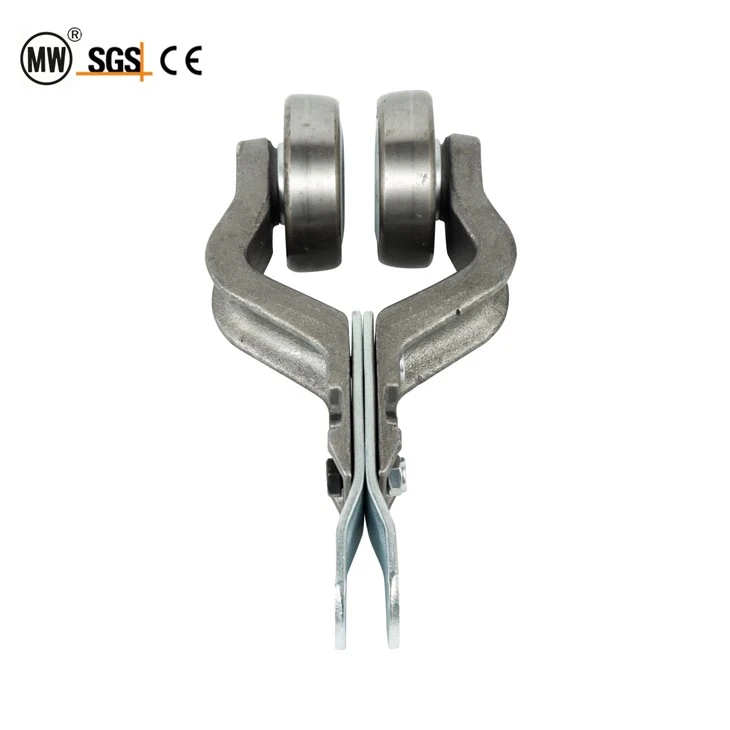
XT160 Load Trolley
Hangzhou Ocean Industry Co., Ltd. is one of the most experienced manufacturers and suppliers of xt160 load trolley in China. Welcome to wholesale customized xt160 load trolley at competitive price from our factory. Good service and quality products are available.
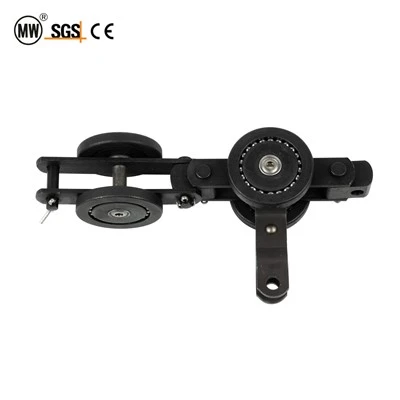
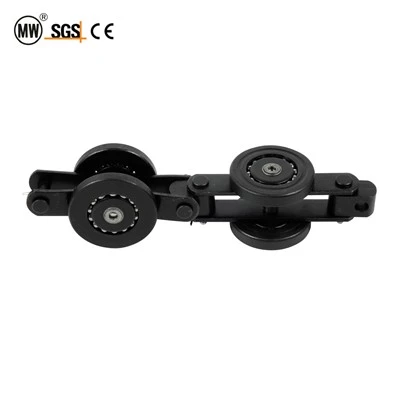
XT160 Sealed Overhead Conveyor Load Trolley for Heavy-Duty Monorail Suspension Systems
Heavy-duty overhead conveyor systems depend on load trolleys that carry the chain, the workpiece, and the dynamic stresses generated by elevation changes, curves, and production stops. When the conveyed items exceed the capacity of light-duty QXG series components-such as full vehicle bodies, engine blocks, large steel fabrications, or heavy appliance cabinets-a forged load trolley built for industrial loads becomes essential. The XT160 sealed overhead conveyor load trolley is engineered for exactly this class of application.
Unlike the stamped or riveted assemblies found in lighter conveying systems, the XT160 load carrier uses a drop-forged steel body that forms the load path, wheel bores, and hanger mounting interface in one continuous grain structure. This monolithic forging approach eliminates the weak points created by welded joints or bolted plates, giving the trolley a single-point load rating of 700–750 kg and an allowable chain load of 3,500–4,000 kg. The sealed bearing wheel set runs maintenance-free at temperatures up to 200°C, with special high-temperature arrangements available for paint curing ovens that exceed this threshold.
Hangzhou Ocean Industry Co., Ltd. supplies the XT160 sealed load trolley as a direct factory component, supporting OEM conveyor builders, system integrators, and end-user maintenance teams. The trolley is compatible with standard 14# and 16# I-beam track profiles commonly used in heavy-duty monorail systems, and it interfaces with drop-forged rivetless chain such as X348, X458, and X678 series, as well as dedicated XT160 forged chain.
Operating Environment & Load Conditions
Load Envelope: The XT160 trolley carries 700–750 kg at each suspension point under normal operating conditions. Allowable chain load is 3,500–4,000 kg per trolley station, while the structural limit load reaches 7,500–8,000 kg. These figures assume proper track alignment, even load distribution, and operating speeds within the rated band. Shock loading from hoists or robotic transfer stations should not exceed 1.5× the single-point rating.
Temperature Range: Standard sealed bearing configuration operates from –20°C to 200°C. For paint curing ovens, powder coating tunnels, or heat treatment lines that operate above 200°C, high-temperature graphite-lubricated bearings or specialized heat-resistant seals can be specified. Contact our engineering team for layouts exceeding 250°C.
Speed Band: Recommended travel speed is 0.5–10 m/min for heavy items. The trolley wheel assembly is rated for speeds up to 15 m/min on straight track sections, but speed should be reduced on horizontal curves and vertical bends to prevent excessive centrifugal swing and wheel flange wear.
Track Compatibility: The XT160 trolley runs on standard 14# and 16# I-beam rails. The wheel tread profile matches the bottom flange curvature of these beam sizes, ensuring full contact across the wheel width and even load distribution. On square-tube or special track profiles, verify wheel tread geometry before ordering.
Engineering Selection Guidance
Choose XT160-1 when: the application demands the highest single-point load capacity (750 kg) and the maximum structural safety margin. This variant is preferred for automotive body-in-white conveyor loops, heavy engine assembly lines, and steel fabrication paint shops where production uptime is critical and replacement access is difficult.
Choose XT160-2 when: the conveyed items are moderately heavy (up to 700 kg per point) and the installation has tighter envelope constraints. The slightly smaller geometry and lower weight (8.8 kg vs. 9.7 kg) can reduce total chain mass on very long loops, lowering drive motor energy consumption.
Bearing Configuration: Standard sealed ball bearings are suitable for dry indoor environments, dry paint shops, and ambient assembly lines. Specify high-temperature sealed bearings for oven sections. For wet or corrosive environments such as plating shops or food wash-down areas, specify stainless steel bearing inserts or sealed stainless bearings with enhanced grease.
Hanger Interface Type: The XT160 load trolley includes a forged hanger plate with a mounting pin for attaching fixtures, hooks, rods, or custom carrying frames. The pin diameter and hole spacing follow the XT160 standard, allowing interchangeability with common fixture hardware. Custom pin sizes and hanger plate orientations are available on drawing order.
Material Selection: Standard material is forged alloy steel (20Cr or 45# steel) with heat treatment to HRC 38–45. For extremely corrosive environments, specify stainless steel or a zinc-plated/hot-dip galvanized finish. For applications requiring magnetic compatibility, specify 304 or 316 stainless steel forgings.
Technical Specification Table
|
Parameter |
XT160-1 |
XT160-2 |
|
Pitch (P) mm |
171 |
170 |
|
Single-Point Load |
750 kg |
700 kg |
|
Allowable Chain Load |
4,000 kg |
3,500 kg |
|
Limit Load |
8,000 kg |
7,500 kg |
|
Unit Weight |
9.7 kg |
8.8 kg |
|
Hanger Height (A) |
180 mm |
174 mm |
|
Body Width (B) |
268 mm |
268 mm |
|
Hanger Pin Dia. (C) |
41 mm |
6 mm |
|
Wheel Base (D) |
120 mm |
120 mm |
|
Wheel Tread Angle (E) |
6° |
4° |
|
Wheel Bore (F) |
70 mm |
70 mm |
|
Pin Spacing (G) |
15 mm |
15 mm |
|
Overall Height (K) |
140 mm |
148 mm |
|
Body Material |
Forged 20Cr/45# steel |
Forged 20Cr/45# steel |
|
Wheel Bearing |
Sealed ball bearing |
Sealed ball bearing |
|
Max. Temperature |
200°C |
200°C |
|
Track Profile |
14# / 16# I-beam |
14# / 16# I-beam |
Specification Notes:
• Single-Point Load: Maximum suspended workpiece weight at the hanger pin under static conditions.
• Allowable Chain Load: Maximum tensile force that may be transmitted through the trolley connection point in normal service.
• Limit Load: Ultimate structural capacity before permanent deformation or failure-used for safety factor calculations, not operating loads.
• Custom dimensions, materials, and surface finishes are available per customer drawing. Contact engineering for deviation review.
Design & Construction Attributes
Drop-Forged Monolithic Body
The XT160 load trolley body is formed by closed-die drop forging from alloy steel bar stock. The forging process aligns the grain flow with the contours of the load-bearing sections, producing a continuous material structure from the wheel bore through the hanger pin boss. This eliminates the stress concentrations that occur at welded seams or bolted joints. After forging, the body is normalized, heat-treated to HRC 38–45, and shot-blasted to prepare the surface for finishing. The result is a trolley body with consistent fatigue resistance across millions of travel cycles.
Sealed Bearing Wheel Assembly
Each trolley carries two running wheels fitted with sealed ball bearings. The contact seals prevent paint overspray, dust, and moisture from entering the bearing cavity, while retaining the factory-filled grease. In normal service, the bearings operate maintenance-free for 12 to 18 months. A grease fitting or oil cup is provided at the trolley end for high-duty or high-temperature applications where supplemental lubrication extends service life. At standard loads, friction coefficient remains below 0.005 and rolling noise is under 65 dB(A).
Hanger Pin & Fixture Interface
The integrated hanger plate includes a hardened pin that serves as the attachment point for fixtures, hooks, rods, or custom carrying frames. The pin is machined from 45# steel and heat-treated to resist wear at the fixture contact surface. The standard pin diameter accommodates the most common XT160 fixture hardware, while custom pin diameters and lengths can be supplied on request. The pin is retained through the forged body with a positive mechanical lock-no threaded fasteners in the primary load path.
Wheel Tread Profile for I-Beam Engagement
The wheel tread is machined to match the flange radius of 14# and 16# I-beam sections. The 4° to 6° tread angle ensures line contact with the beam flange under rated load, minimizing contact stress and extending both wheel and track life. Wheel bores are precision-machined to a 70 mm diameter to accept the sealed bearing cartridge, with the bearing outer race press-fit into the forged wheel hub.
Corrosion Protection Options
Standard finish is black oxide or anti-rust oil coating for dry indoor environments. Optional zinc plating provides sacrificial corrosion protection for humid plating shops or wet processing areas. Hot-dip galvanizing is available for outdoor installations, food processing facilities with frequent wash-downs, and marine-atmosphere applications. Stainless steel construction (304 or 316) can be specified for environments requiring both corrosion resistance and magnetic compatibility.
Installation & Maintenance Precautions
1. Track Inspection Before Installation: Verify that the I-beam flange is free from weld spatter, burrs, and deformation. The wheel tread depends on smooth flange contact; any protrusion on the running surface accelerates wheel wear and creates vibration. Use a straightedge to check flange flatness over every 3-meter section.
2. Trolley Spacing & Load Distribution: Space trolleys according to the chain pitch and the weight distribution of the suspended item. Avoid placing more than one maximum-rated load on consecutive trolleys without intervening empty links. Uneven loading creates localized stress peaks in the chain and track.
3. Wheel Alignment Check: After installation, manually push several trolleys through the track to confirm that both wheels roll freely and make equal contact with the flange. Misaligned wheels cause uneven wear on one side and increase rolling resistance. Check track alignment at horizontal curves, where misalignment has the greatest effect.
4. Bearing Lubrication Schedule: Sealed bearings are maintenance-free for 12 to 18 months under standard conditions. In high-temperature oven sections, re-grease through the oil cup every 6 months using high-temperature lithium-complex grease. In wet or dusty environments, inspect seals quarterly and replace any bearing showing rough rotation or seal damage.
5. Wear Inspection Criteria: Inspect wheel tread for flattening or scoring every 6 months. Replace wheels when tread wear exceeds 2 mm or when the wheel diameter has reduced by more than 3% from the original dimension. Check the hanger pin for elongation or wear at the fixture contact area; replace the trolley if pin wear exceeds 1 mm.
6. Safety Factor Verification: Always maintain a minimum safety factor of 4 between the rated single-point load and the maximum suspended weight. For lifting or transfer operations where dynamic forces are present, increase the safety factor to 6 or higher.
FAQ

Hot Tags: xt160 load trolley, China xt160 load trolley manufacturers, suppliers, factory
Previous
No InformationYou Might Also Like

Send Inquiry