




Manual Oil Sprayer
Hangzhou Ocean Industry Co., Ltd. is one of the most experienced manufacturers and suppliers of manual oil sprayer in China. Welcome to wholesale customized manual oil sprayer at competitive price from our factory. Good service and quality products are available.
Product Description
The Ocean Industry Manual Oil Sprayer fills a critical gap between over-engineered automatic lubrication systems and crude manual oiling methods. For maintenance teams servicing overhead conveyors, production line chains, forklift masts, and exposed bearings, this tool delivers two operational modes from a single handheld unit: a trigger-actuated precision spray for on-demand spot lubrication, and a gravity-fed drip mode for sustained chain oiling during production runs.
Unlike single-purpose oil cans that limit the operator to either spraying or dripping, this dual-function architecture keeps both capabilities accessible without swapping equipment. The hardened steel piston pump generates consistent atomized spray at each stroke, while the needle-valve-controlled drip port delivers a metered, continuous oil feed when the unit is suspended above a chain run. No electricity, no compressed air, no batteries - the tool is ready to use anywhere on the factory floor immediately upon filling the reservoir.
For operations transitioning away from disposable aerosol lubricants, the refillable 500 mL (standard) or 750 mL (heavy-duty) reservoir reduces ongoing consumable costs and eliminates empty-can disposal waste. Paired with a transparent body that allows instant visual oil-level checks, it supports lean maintenance workflows where every minute of downtime matters.
Performance characteristics
Dual-Mode Lubrication Without Tool Changeover
The operator switches between atomized spray and controlled drip simply by choosing the output port - no disassembly, no accessory swap, no interruption to the maintenance sequence. Spray mode handles pin joints, roller bearings, and guide wheel contact surfaces that require penetrating mist. Drip mode serves chain runs inside enclosed tracks where sustained, gravity-fed oiling is needed during active production. This flexibility reduces the number of separate lubrication devices a technician must carry onto the maintenance platform.
Metered Output Reduces Lubricant Consumption
Adjustable spray volume (0.5–2.0 mL per stroke on the standard model, up to 3.0 mL on heavy-duty) and calibrated drip rate (0.5–3.0 drops per second, expandable to 5.0 drops/second on the HD variant) allow the operator to dial in the minimum effective dose for each lubrication point. Compared to brush-on or pour-on methods where excess oil drips onto floors and creates slip hazards, metered delivery typically cuts lubricant usage by 30–50% across a full maintenance shift while achieving equivalent or better chain-wear protection.
Mechanical Simplicity for Demanding Environments
Every functional component - piston, spring, seals, nozzle, needle valve - operates mechanically without reliance on sensors, timers, circuit boards, or pneumatic lines. This eliminates the most common failure modes associated with automatic lubrication hardware: solenoid burnout, sensor miscalibration, controller software faults, and air-line condensation. Maintenance teams working in painting lines, powder coating ovens, electroplating zones, and outdoor storage yards face airborne particulates, temperature swings, and chemical exposure that shorten the life of electronic lubrication equipment; a purely mechanical tool is inherently more resilient in these conditions.
Ergonomics Designed for Repetitive Use
Field testing with maintenance technicians who perform 2–4 hours of continuous lubrication during scheduled shutdowns shaped the handle contour and trigger force. The molded grip distributes palm pressure evenly rather than concentrating it at the thumb web, and the textured surface maintains secure handling when the operator is wearing oil-wetted work gloves. Trigger actuation force (~8 N) is set low enough to prevent hand fatigue during repetitive spraying yet firm enough to avoid accidental discharge when carrying or hanging the unit.
Consistent Performance Across Reservoir Levels
A vented cap design equalizes internal pressure as the oil level drops, ensuring that spray atomization quality and drip rate remain stable from a full reservoir down to the last 10% of capacity. This eliminates the gradual performance degradation that occurs in unvented manual sprayers - where weakening spray and inconsistent drip force the operator to refill prematurely or accept subpar lubrication coverage.
Low Total Cost of Ownership
The service parts that experience mechanical wear - piston lip seal, wiper seal, and nozzle O-ring - are user-replaceable with basic hand tools. A seal service kit costs a fraction of the unit price and restores full pumping performance in under five minutes. Compared to automatic lubrication systems that require specialist technicians for troubleshooting and component replacement, the manual sprayer's maintenance burden fits within standard in-house maintenance team capabilities, keeping long-term ownership costs exceptionally low.
Dual-Function Design: One Tool, Two Solutions
| Function & Application | Core Value & Mechanism | Benefit for Your Business |
|---|---|---|
| Manual Oil Can | On-Demand Precision Lubrication • Delivers a precise amount of lubricant exactly where and when it's needed. |
• Ideal for spot-lubrication of bearings and joints. • Solves Problem: Eliminates the mess and waste of traditional methods, reducing lubricant consumption. |
| Simple & Ergonomic Operation • Ergonomic design allows for easy, controlled operation with minimal effort. |
• Solves Problem: Speeds up maintenance tasks and reduces operator fatigue. | |
| Chain Oil Dripper | Continuous, Gravity-Fed Protection • Utilizes a reliable gravity-fed system for a slow, steady oil drip. |
• Ensures chains remain optimally lubricated, reducing wear. • Solves Problem: Prevents costly downtime caused by chain failure due to under-lubrication. |
| "Set and Forget" Convenience • Works autonomously once adjusted and mounted. |
• Solves Problem: Frees your maintenance team from constant manual checks, allowing them to focus on higher-value tasks. |
Application
| Where to Use | What to Lubricate | How It Works |
|---|---|---|
| Conveyor Systems | Chains, Rails | Drip + Spot Lubrication |
| Production Lines | Bearings, Joints | Precision Oiling |
| Warehouse Equipment | Forklift Chains | Auto Drip + Manual Care |
| Machine Shops | Guides, Gears | Dual-Function Maintenance |
| Backup Use | Dead Spots, Emergencies | Reliable Backup Tool |
Overhead Conveyor Chains (Painting and Powder Coating Lines)
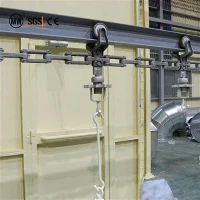
Overhead enclosed-track and power-and-free conveyor chains operating in painting, powder coating, and electroplating facilities face a specific lubrication challenge: chain pins and rollers inside the enclosed track are shielded from direct access, yet they experience continuous friction and elevated temperatures from curing ovens. The spray mode delivers atomized oil through track access windows and around guide wheel assemblies, while drip mode sustains oil coverage for chain sections traveling through the process tunnel where operator intervention is not possible during production. Regular use on these lines measurably extends chain replacement intervals and reduces unplanned stoppages caused by seized chain links.
Forklift Mast Chains
Mast chains on counterbalance forklifts endure high-tension reciprocating motion that squeezes lubricant from pin-bushing interfaces with every lift cycle. Uneven or insufficient lubrication leads to chain elongation, which causes uneven fork elevation and accelerated mast rail wear. The manual sprayer's adjustable nozzle reaches chain links at full mast height, and the metered spray output ensures that each link receives a consistent oil film without excess lubricant dripping onto the truck body or warehouse floor below.
Conveyor Drive and Idler Bearings
Pedestal bearings, pillow block bearings, and idler wheel hubs on conveyor lines are often excluded from centralized automatic lubrication circuits due to their distributed locations or intermittent duty cycles. The sprayer's stream mode directs a concentrated jet precisely into bearing seal gaps and grease nipple ports, servicing these components in seconds during scheduled walkaround inspections.
Agricultural Conveyor and Harvesting Equipment
Grain elevator chains, hay baler conveyors, and combine harvester feeder chains operate in high-dust environments where automatic lubrication systems suffer from nozzle clogging and electrical connector contamination. The manual sprayer's purely mechanical design resists dust ingress far better than electronic or pneumatic lubricators. Additionally, the tool's independence from tractor or implement power take-off means it can be used for field maintenance without running the equipment engine. Anti-rust oil can also be applied to exposed metal surfaces of harvesting equipment during off-season storage.
Machine Shop and Small-Scale Production Equipment
For small conveyors, packaging machines, textile looms, and woodworking equipment in facilities without centralized lubrication infrastructure, the manual sprayer serves as the primary lubrication tool. Its portability suits workshops where equipment is distributed across a large floor area, making fixed automatic lubrication points economically unjustifiable.
Emergency and Backup Lubrication
Even fully automated facilities benefit from keeping a manual sprayer accessible. During central lubrication system malfunctions, pump failures, or controller faults, the manual unit provides immediate backup capability - allowing production to continue while the automatic system is being repaired. It also covers "dead spots" on the conveyor layout that fall outside the coverage zone of fixed automatic lubrication nozzles, such as curved track sections with limited mounting points.
How does it work
The automatic oiling cup typically works through the following mechanism:
It is equipped with sensors that detect various parameters such as the movement of mechanical parts, temperature, or pressure. When these sensors detect a need for lubrication, they trigger a pumping mechanism.
The pumping mechanism draws lubricant from a reservoir within the cup and forces it through a delivery system, which may consist of tubes or channels. The lubricant is then precisely dispensed onto the targeted area, such as a bearing, gear, or sliding surface.
The amount of lubricant dispensed can be controlled by adjusting settings on the cup or through programmable controls. Some automatic oiling cups may also have timers that determine when to initiate the lubrication process based on a set schedule.
This continuous and automated process ensures that the machinery or equipment is always properly lubricated, reducing friction, wear, and the risk of breakdowns.
How Does It Work
Spray Mode Operating Sequence
The operator fills the transparent reservoir with chain oil through the wide-diameter fill opening, then tightens the vented cap. Squeezing the trigger drives the hardened steel piston forward through the pump cylinder, compressing a pre-measured oil charge. The pressurized oil is forced through a stainless steel mesh inlet filter (blocking particles above 150 microns) and into the nozzle assembly. At the nozzle orifice - precision-drilled to 0.5 mm - the high-velocity oil stream atomizes into a fine mist upon exit. The rotatable brass nozzle tip adjusts the spray geometry without changing nozzles: tightening clockwise narrows the cone into a penetrating stream for deep-bearing access; loosening counterclockwise widens the cone into a broad mist for surface coverage. When the trigger is released, the stainless steel return spring pushes the piston back to its starting position, drawing the next oil charge from the reservoir through the pickup tube into the pump cylinder for the next stroke. Each complete cycle delivers a metered, repeatable oil volume.
Drip Mode Operating Sequence
When the operator switches to drip mode, they position the unit above the chain using the hanging bracket, aligning the drip nozzle with the target lubrication point. Opening the needle valve by rotating the knurled adjustment dial allows oil to flow from the reservoir through the drip passage solely by gravity - no pumping action is required. A small vent hole in the reservoir cap allows air to enter as oil exits, equalizing internal pressure so the drip rate stays consistent from full reservoir to near-empty. The operator counts drops per second during initial setup, then confirms the rate after one minute of operation. Once set, the drip continues unattended until the reservoir is empty or the operator closes the valve. This autonomous operating mode is particularly valuable for lubricating chain sections inside enclosed tracks where access during production is restricted by safety guarding or where the chain operates at temperatures uncomfortable for extended manual presence.
Key Mechanical Safeguards
The double-seal piston architecture incorporates a primary lip seal to prevent lubricant backflow during the compression stroke and a secondary wiper seal to block external dust and metal particles from entering the cylinder bore during piston retraction. The inlet filter upstream of the nozzle traps particles that could otherwise clog the 0.5 mm orifice. All seals are field-replaceable - the pump body unscrews from the reservoir base for access to the seal stack, requiring only a standard wrench and less than five minutes of downtime.
Structural Parameters
Reservoir Assembly
The reservoir body is injection-molded from impact-resistant transparent polymer with molded-in 100 mL graduated markings. Standard capacity is 500 mL; the heavy-duty variant extends to 750 mL for operators servicing long chain runs between refills. The fill opening diameter (45 mm standard, 55 mm HD) accommodates common oil pour spouts and funnels to minimize spillage during refilling. The cap includes a vent port with a fine mesh breather to equalize internal pressure while preventing dust ingress. An integrated hanging loop (reinforced bracket on HD) supports the unit in drip mode at chain height.
Pump Mechanism
A single-stage hardened steel piston (dual-stage on HD for higher output volume) operates inside a honed cylinder bore with a surface finish of Ra 0.4 µm for low-friction piston travel and consistent seal mating. The piston return spring is wound from stainless steel wire (SUS 304 equivalent) to resist corrosion from oil additives and atmospheric moisture. Seal material is nitrile rubber (NBR) as standard, with FKM (Viton) available as a factory option for high-temperature chain oils or synthetic lubricants with aggressive additive packages.
Nozzle and Delivery System
The standard nozzle body is machined brass with a single 0.5 mm orifice; the HD variant uses stainless steel with dual orifices for higher flow volume. The rotatable tip allows the operator to transition between mist and stream patterns without tools. The pickup tube incorporates a 150-micron stainless steel mesh filter at its inlet. The drip nozzle is a separate, dedicated port with its own needle valve assembly, ensuring that spray and drip output paths are isolated - adjusting the drip rate does not affect spray atomization quality.
Control and Adjustment
Spray output per stroke is adjusted by rotating the stroke-limiting collar on the pump body, which determines how far the piston travels and therefore how much oil is drawn into the cylinder per cycle. Drip rate is adjusted via the knurled needle-valve dial below the reservoir. Both adjustments can be made with one hand while the operator wears standard work gloves.
Mounting and Installation
The integrated hanging bracket on the reservoir body supports the unit above a conveyor chain at any accessible point along the track. No permanent mounting hardware is required - the bracket hooks onto overhead track flanges, I-beam edges, safety guard rails, or any horizontal structural member within reach. For conveyor lines with limited overhead clearance, an optional magnetic-mount bracket (available separately) attaches the unit to steel track sections without requiring a guard rail or I-beam lip.
FAQ

Hot Tags: manual oil sprayer, China manual oil sprayer manufacturers, suppliers, factory, intelligent storage and retrieval, storage and retrieval equipment, cold storage automation, hazardous material storage automation, automated storage for aquarium, automated storage for cinema
You Might Also Like


Send Inquiry